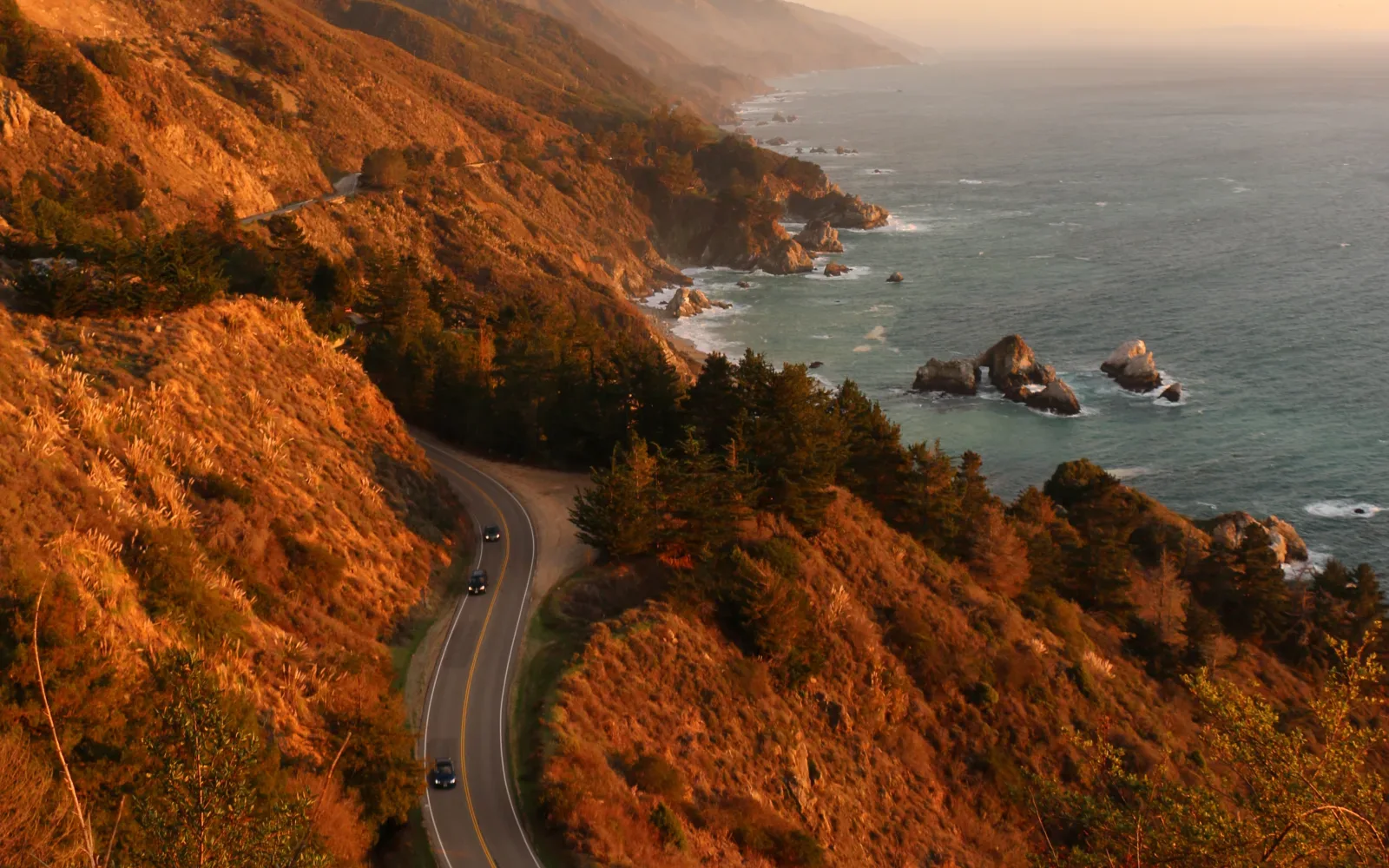
Highway 1 tracing the cliffs above California's Pacific coast

Decision guide

Big Sur: Stay Overnight or Drive Straight Through?

Decide whether a Big Sur overnight improves a California Highway 1 trip, and choose a base without assuming the coastal through-route is open.

Go to the guide
decision6 planning sectionsReviewed 2026-10-01
Big Sur overnight versus through-drive decision
Trip shapeWorks whenMain trade-off
Through-driveBig Sur is one stage within a longer Highway 1 trip and only a few stops matterThe coast becomes a transfer day; delays can push the next check-in late
Overnight nearbyYou want a walk, unhurried pullouts or time to change the planRequires a confirmed legal base and a route that fits the actual access
Separate north/south visitsA closure prevents a continuous through-routeMore driving, but it respects the official restriction instead of inventing a bypass

Answer first

Use the constraint that changes the plan.

Stay overnight on or near the Big Sur stretch when walks, viewpoints and a relaxed coast day are the point of the trip. A through-drive is reasonable only when current Caltrans access permits it, you are content with fewer stops, and the next accommodation does not force an after-dark arrival. Never make a fixed north-to-south booking sequence before checking whether the route is continuous.

01

Begin with today's road status

Highway 1 access is a precondition, not a detail to check after booking. Caltrans is the operating authority; tourism itineraries illustrate the experience but cannot confirm a current through-drive.

  • Check the exact Big Sur segment on Caltrans before committing to a point-to-point stay.
  • Identify which side of any restriction your lodging and priority stops sit on.
  • Do not let a navigation app route you onto an unsuitable local road to preserve the plan.

02

Choose an overnight by what you want to do

The point of sleeping near Big Sur is to give the coast time outside the car. Decide whether the following morning is for a walk, an early viewpoint, or simply a calmer departure.

  • A Monterey/Carmel base suits a north-side start and easy services.
  • A south-side base suits the continuation toward San Simeon and the Central Coast when access allows.
  • A central-coast stay is not automatically a Big Sur stay; include the actual return or onward drive.

03

When a through-drive is enough

Choose it deliberately for a smaller stop list, not because the map suggests the miles are short. A single scenic lunch and a few lawful pullouts can still be a good day.

  • Leave daylight for the most winding section.
  • Protect the next check-in time from stop creep and traffic.
  • Skip an extra attraction before compressing the road itself.

04

What to do if the road is interrupted

A closure changes the itinerary shape. Visit accessible sections from their respective sides or postpone the through-drive; do not imply that an inland route reproduces the Big Sur coast.

  • Recheck lodging cancellation and change terms with the provider.
  • Keep one optional stop on each accessible side rather than a fixed checklist across the closed section.
  • Use Caltrans for the latest restriction and official detour information.

05

Booking order

  • Define the accessible route and the side on which each desired stop lies.
  • Choose a base that preserves a full coast day or a manageable through-stage.
  • Verify the rental return and onward overnight timing.
  • Recheck road conditions shortly before the drive; fixed plans are not evidence of access.

06

Decision rule

If the coastal experience matters, buy time with an overnight. If the trip can spare only a pass-through, reduce stops. In both cases the current road authority decides whether a through-drive exists.

Related routes

Route pages contain the current structured pace, vehicle, itinerary and official-source context.

Official references

Recheck what can change

Sources were reviewed on 2026-10-01. Current road, rental and access rules can change sooner.